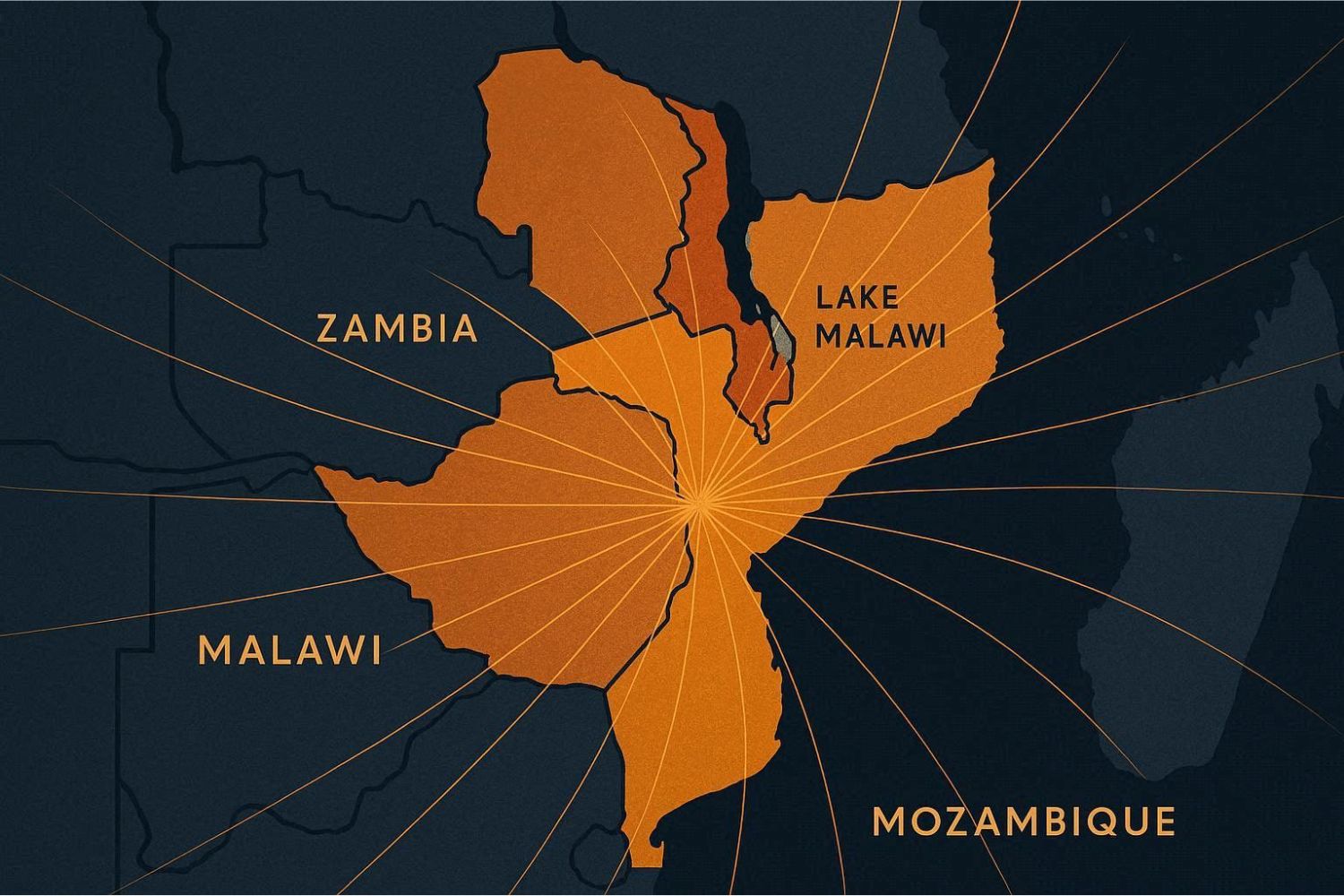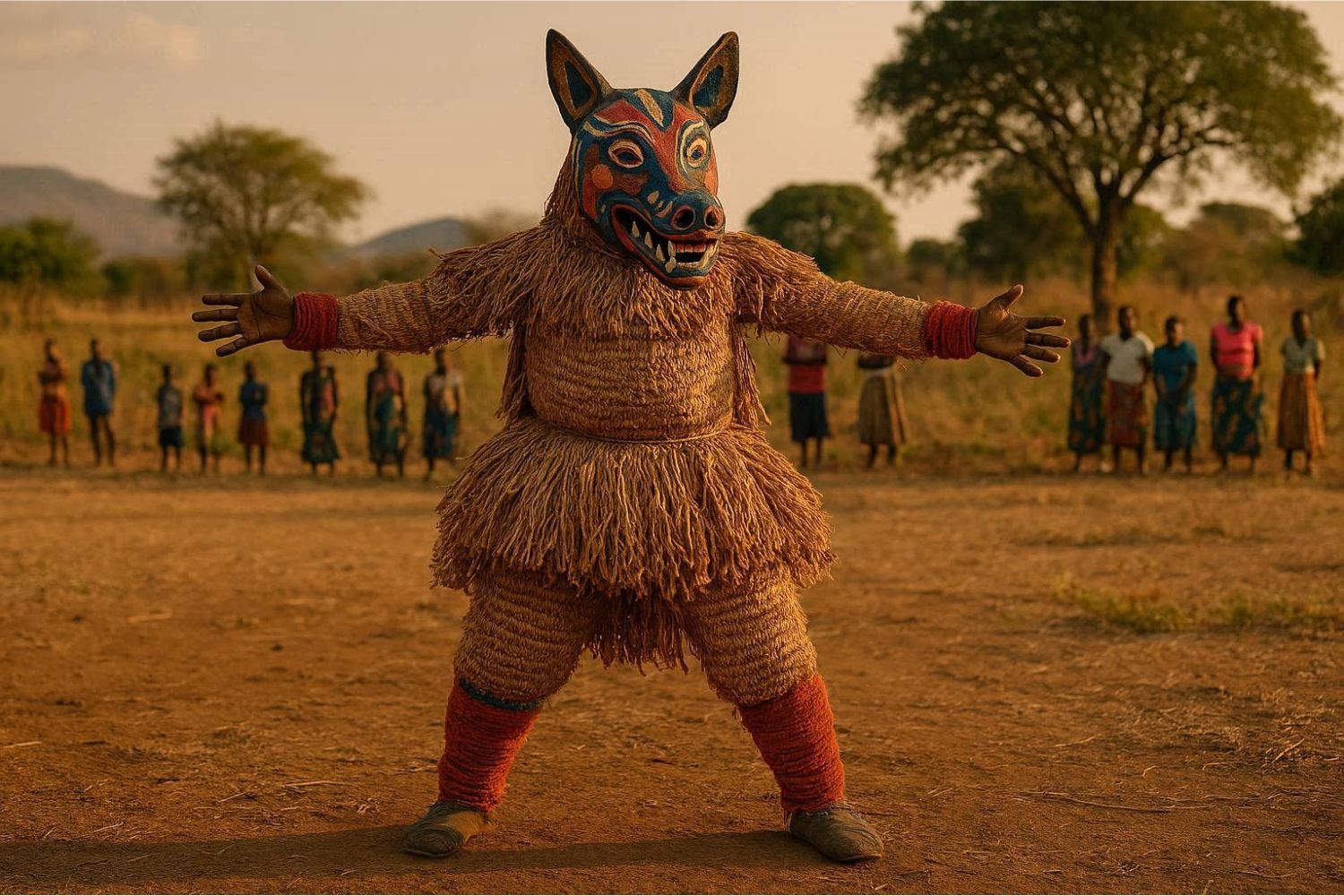
In villages across central Malawi, eastern Zambia, and western Mozambique, you may hear drums before you see anything. Then a figure emerges — costumed head to foot in straw, fabric, and carved wood, moving with controlled ferocity. It stops. It addresses the crowd. It dances again.
This is Gule Wamkulu. The Great Dance.
It is not a performance in the way a stage show is a performance. It is a prayer, a lesson, a bridge between the living and the dead. Its Chewa name makes this plain: Gule Wamkulu, or its older name, Pemphero Lalikulu — the Great Prayer.
It is also, remarkably, still here. Despite colonial bans, missionary pressure, and the long collapse of the Maravi Kingdom, Gule Wamkulu survived. UNESCO recognised it in 2005 as one of the Masterpieces of the Oral and Intangible Heritage of Humanity. The Mankhamba Cultural Revival counts it as one of the three living pillars of Chewa identity — alongside the Kalonga lineage and the Kulamba ceremony.
This is its story.
What Is Gule Wamkulu?
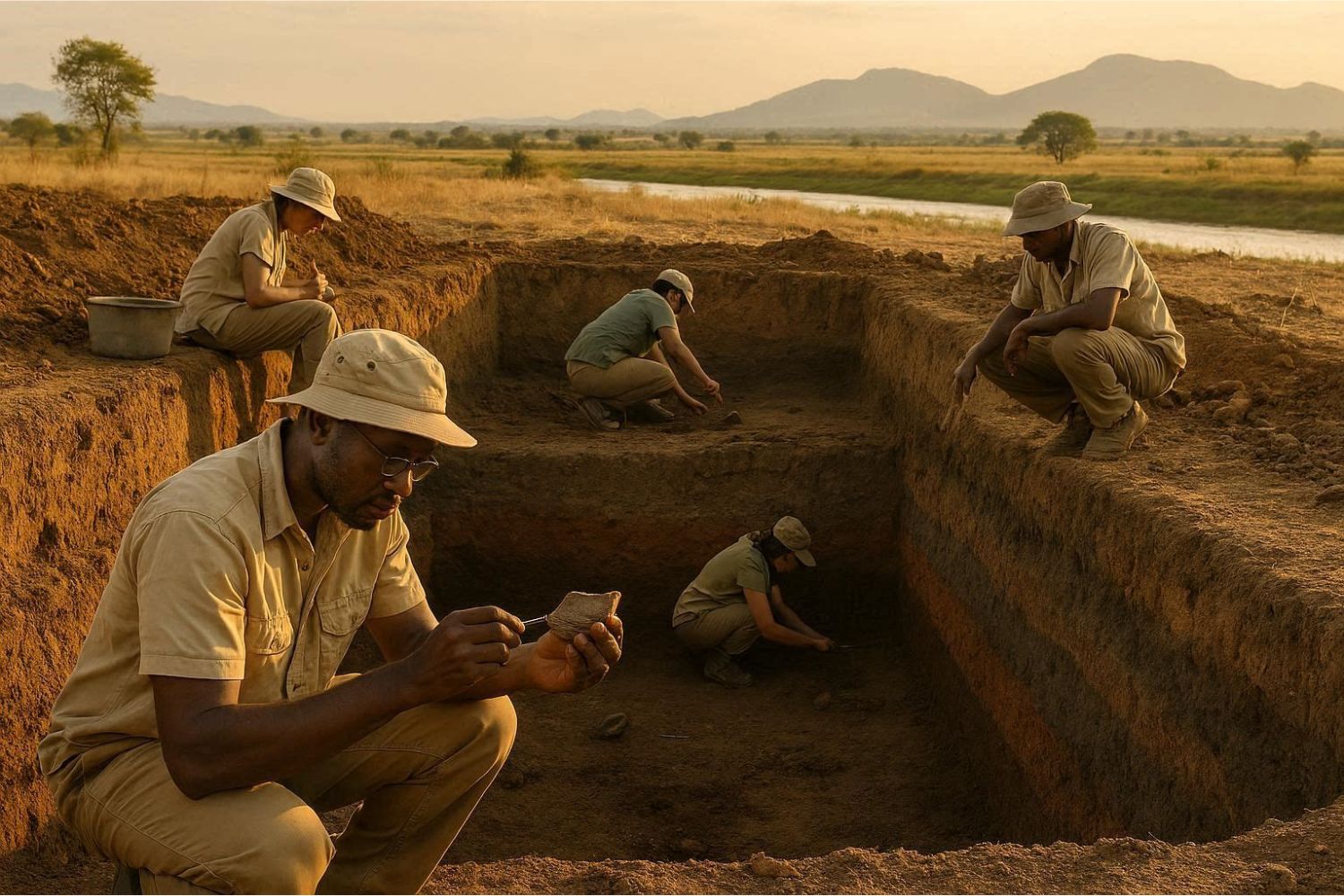
Gule Wamkulu is a ritual masked dance performed by initiated members of the Nyau brotherhood — the secret society of the Chewa people. The Nyau brotherhood is one of the oldest surviving cultural institutions in central Africa. Archaeological and linguistic evidence traced by researchers, including Dr Yusuf Juwayeyi in Archaeology and Oral Tradition in Malawi (2020), links the Nyau’s use of ceremonial masks directly to the Bumbudye secret society of the Luba people in what is now the Katanga region of the Democratic Republic of Congo — the ancestral homeland the Chewa migrated from, likely between the 12th and 15th centuries.
In other words, the Nyau brotherhood and its masked dances did not begin in Malawi. They arrived with the Chewa people. They are that old.
The Nyau see themselves as part of the spirit world — not as entertainers. Their masks and costumes represent ancestral spirits and animals, each character carrying its own moral lesson, song, and drum rhythm. A dancer wearing the mask of a hyena teaches something different from a dancer wearing the mask of a slave trader or a modern motorbike. Each figure is a lesson in how to live.
Membership in the Nyau was, for many generations, obligatory for Chewa men. Christian mission influence has reduced this in some areas, but the brotherhood remains active across all three countries where the Chewa live. Its costumes are prepared in strict secrecy. Outsiders who intrude on this preparation face serious consequences.
When Is Gule Wamkulu Performed?
The Great Dance appears at four kinds of occasions.
The first is after the July harvest, when the growing season ends and the community gives thanks. The second is at funerals and memorial rites, where the Nyau dancers act as intermediaries — the masked figures represent the spirits of the dead, crossing back to comfort and guide the living. The third is at initiation ceremonies, marking the transition of young men into adulthood. The fourth is at the installation or death of a chief, where the dance affirms the legitimacy of leadership and the continuity of the community’s bond with its ancestors.
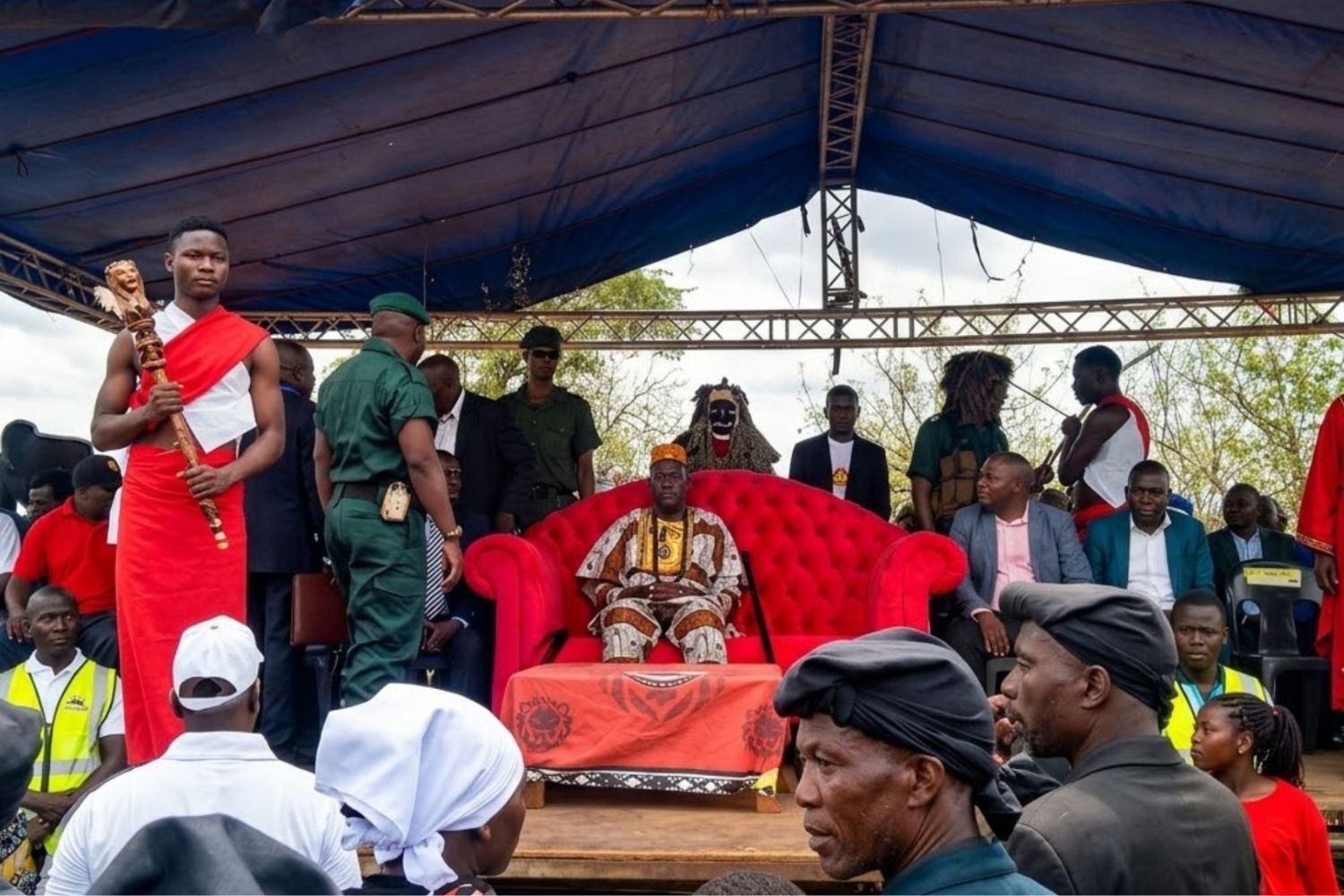
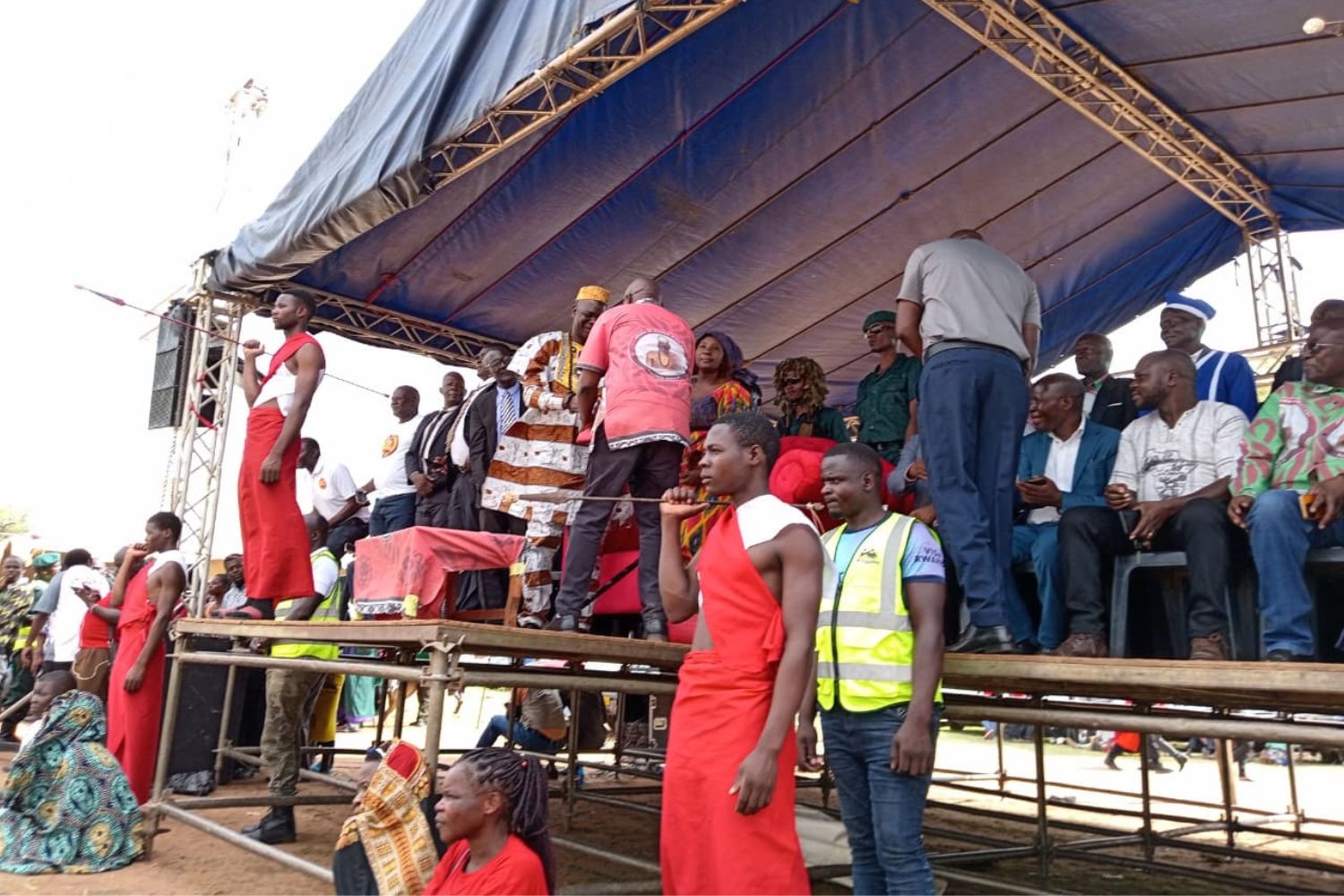
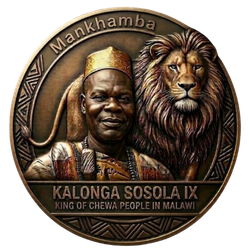
At the coronation of Kalonga Sosola IX on 22 November 2025, Gule Wamkulu was performed alongside Mganda, Chisamba, and Chiwoda dances. Its presence at the coronation was not decorative. It was a formal statement — that the ancestral world recognised this king, and that the Chewa cultural covenant was intact.
The Colonial Ban: How Missionaries and Officials Tried to Stop It
For nearly two centuries, outside forces tried to end Gule Wamkulu.
Christian missionaries who arrived in the region from the mid-19th century onwards viewed the Nyau brotherhood as pagan, dangerous, and incompatible with conversion. They pressured colonial authorities to restrict or ban its activities. The British colonial government, which governed Malawi as Nyasaland from 1891, responded to this pressure. Related ceremonies, including the Kulamba gathering where Chewa chiefs paid homage to their king, were formally banned in 1934. That ban lasted fifty years, until Kalonga Gawa Undi X revived the Kulamba ceremony in 1984.
Gule Wamkulu itself was not straightforwardly banned on paper — but it was suppressed, discouraged, and restricted across many communities. Missionaries taught converts that participation in Nyau activities was incompatible with Christian faith. Colonial administrators viewed the secrecy of the Nyau with suspicion.
Yet the dance continued. It continued because the Nyau brotherhood was exactly what it always had been: a decentralised, community-held institution with no single headquarters that could be closed. Every village with initiated men could keep the tradition alive independently. The masks were hidden. The dances moved. The knowledge was passed on in secret.
This is the fact that matters: the Chewa did not have a king from 1863 to 2025. They did not have a Kulamba ceremony from 1934 to 1984. But they had the Nyau. For over a century, during a period when the Kalonga’s throne sat empty and colonial law governed daily life, it was the Nyau brotherhood and Gule Wamkulu that held Chewa identity together.
“The Nyau brotherhood served as a mechanism for cultural preservation and initiation, celebrating the integration of young men into adult society even in the absence of a sovereign king.” — Maravi Kingdom: Mankhamba Kalonga Revival, Mankhamba Cultural Revival
What UNESCO’s Recognition Means
In 2005, UNESCO inscribed Gule Wamkulu on its list of Masterpieces of the Oral and Intangible Heritage of Humanity — a programme designed to protect cultural expressions at risk of disappearing. The recognition formally placed the Great Dance alongside the world’s most significant living traditions.
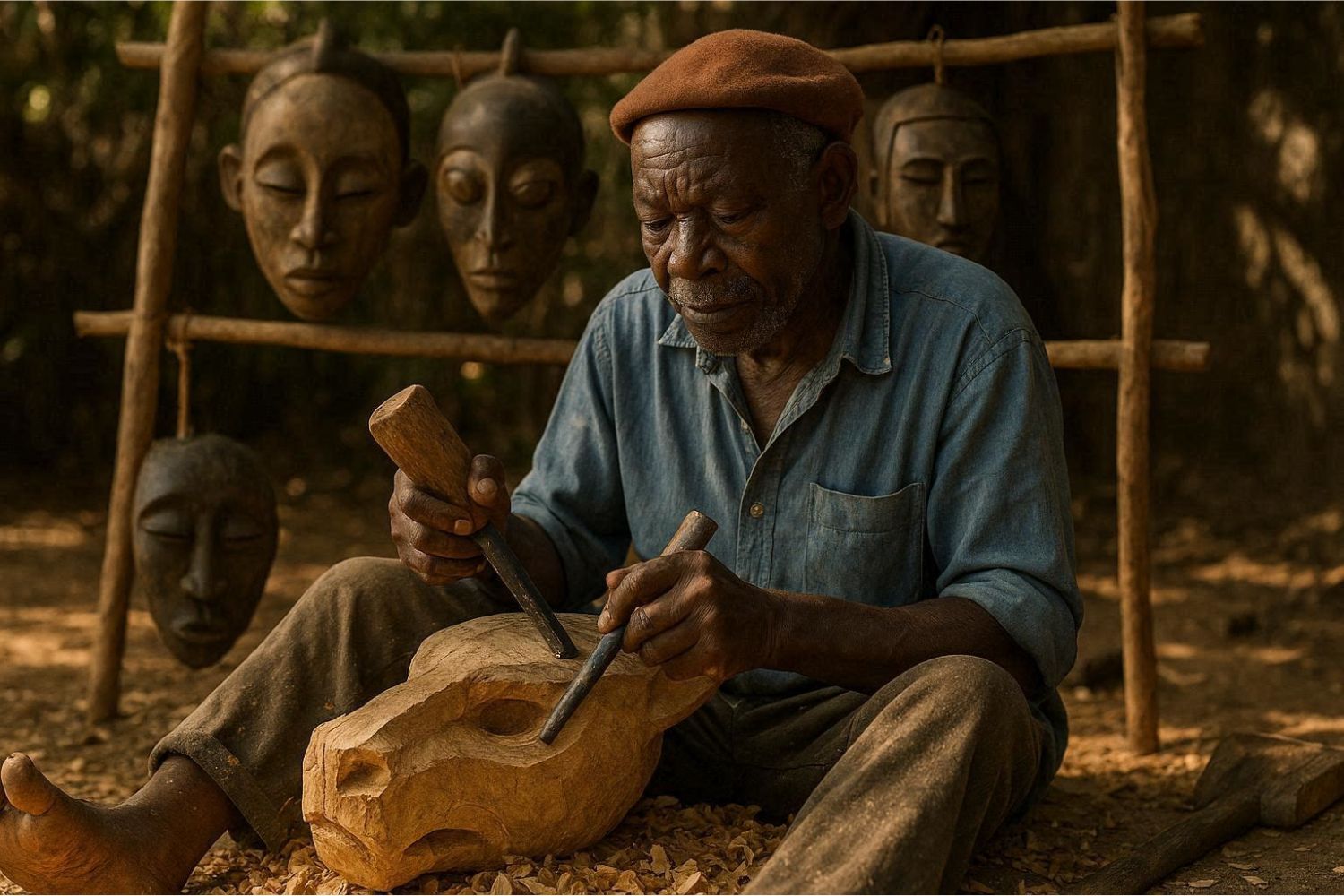
UNESCO’s concern was not without reason. The mask-making craft at the heart of Gule Wamkulu is under pressure. Traditional masks are made from wood, straw, feathers, and animal skins — materials that require skill, time, and knowledge passed carefully from elder to younger. Research documented by the Endangered Material Knowledge Programme has found that these authentic masks are increasingly being replaced by factory-made rubber and plastic replicas, while the artisans who know the traditional techniques are ageing. The number of craftsmen who still make authentic Gule Wamkulu masks using traditional methods is shrinking.
Over 400 masks associated with the Nyau society are exhibited at the Chamare Museum in Dedza District, Malawi — close to the ancient Mankhamba site. This collection is one of the largest records of the tradition’s material culture, and its proximity to Mankhamba is fitting. Both the dance and the ancient capital are part of the same cultural story.
Gule Wamkulu Today: Survival and Pressure
Gule Wamkulu is not a museum piece. It performs at national independence celebrations in Malawi. It appears at political rallies. Nyau troupes from all three Chewa countries — Malawi, Zambia, and Mozambique — participate in the annual Kulamba ceremony in Zambia each August.
But it faces real pressures. The commercial side of Gule Wamkulu — performing at tourist events and public shows — has grown. With that growth, some scholars note, the entertainment function is beginning to eclipse the ritual one. When a dance is performed for a fee before a camera rather than for a community at a funeral or an initiation, something shifts. The form may survive even as the meaning changes.
This is why the Mankhamba Cultural Revival includes active support for the Nyau brotherhood as one of its three core cultural commitments. The organisation’s position is that Gule Wamkulu can only be fully preserved if the wider Chewa cultural framework — the Kalonga lineage, the Makewana shrines, the Kulamba ceremony — is also strong. These traditions hold each other up. Preserving one while neglecting the others is not preservation. It is display.
What It Means for the Mankhamba Revival
When Gule Wamkulu dancers performed at the coronation of Kalonga Sosola IX in November 2025, they were doing what the Nyau have always done at the installation of a chief. They were marking a transfer of authority. They were calling the ancestors to witness.
The Mankhamba Heritage Festival — planned for 2026 and due to be held at the ancient capital itself — will feature performances by the Nyau brotherhood and visiting troupes from Chewa communities in Mozambique and Zambia. For the first time in over 160 years, the Great Dance will be performed at the original seat of the Maravi Kingdom.
That is not a cultural event. That is a homecoming.
Support Us
To support the preservation of Gule Wamkulu and Chewa oral heritage, visit our Support Us page. Learn more about the Mankhamba Heritage Festival on our Our Work page.