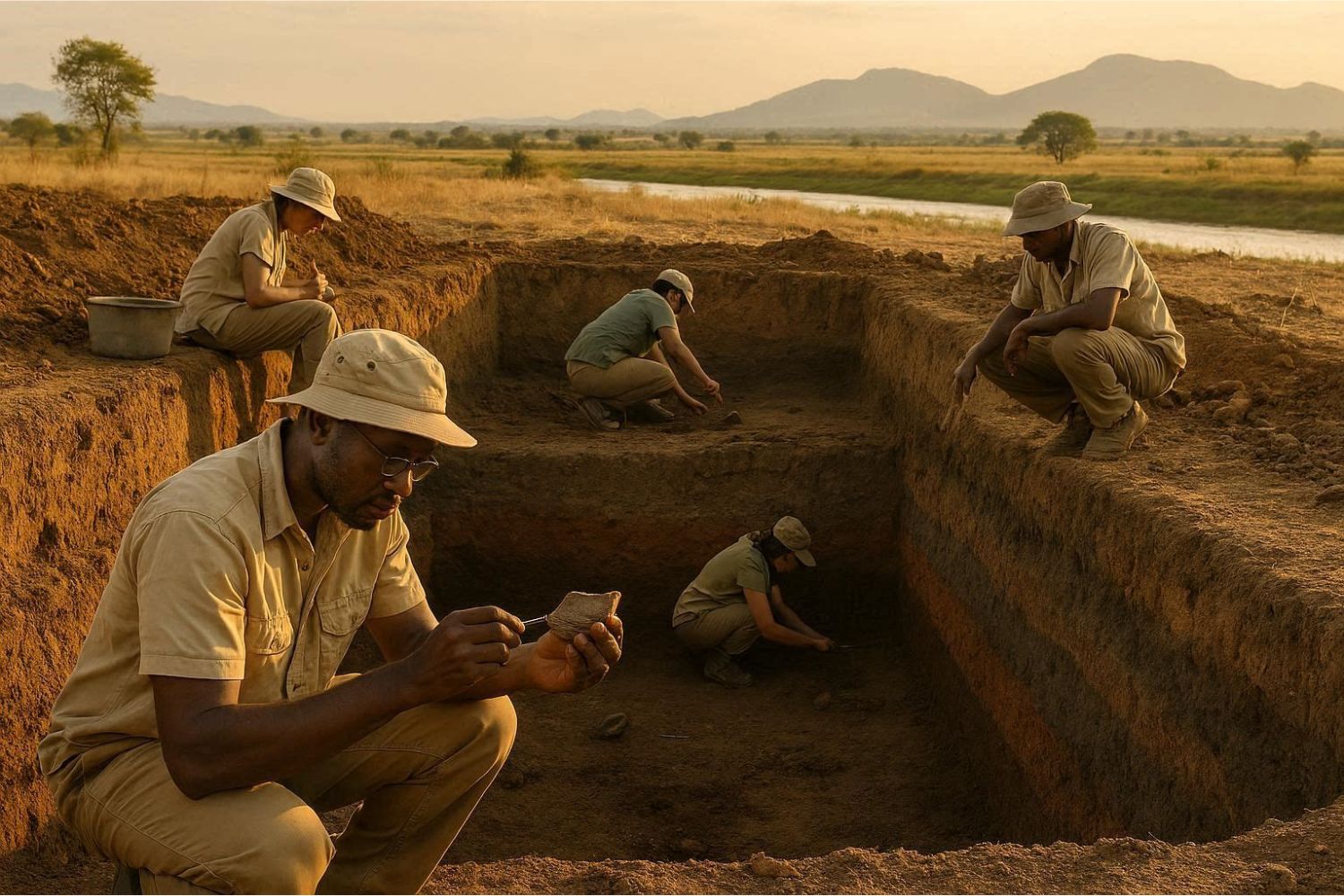
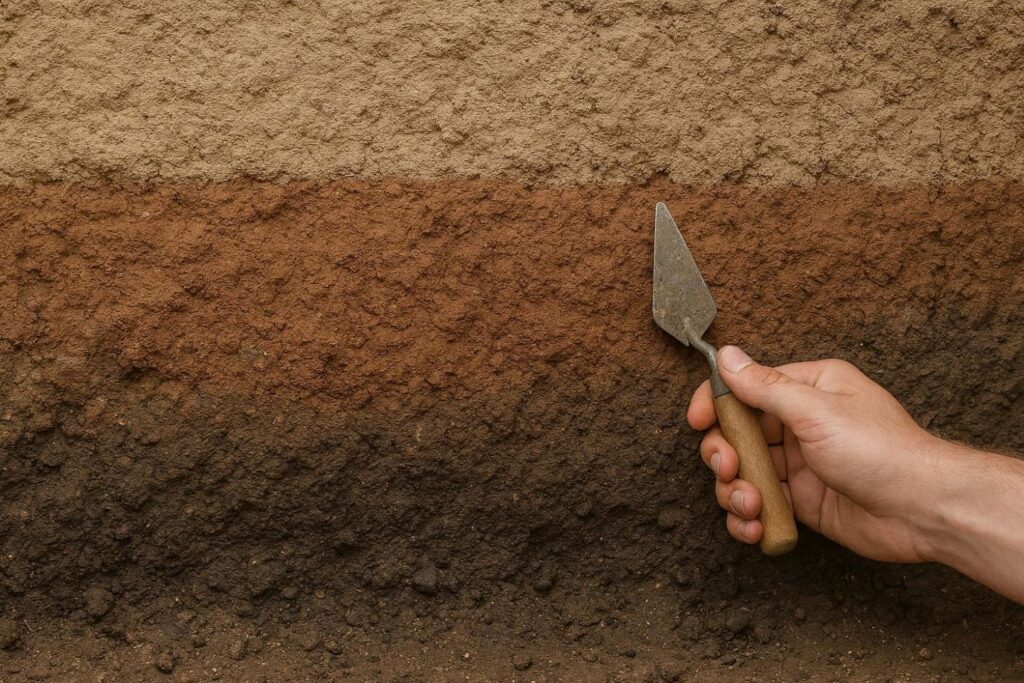
The excavation uncovered four distinct soil layers. Each layer held a different period of occupation, readable like pages in a book — except the book had been written in charcoal, pottery, metal, and bone.
Carbon dating of charcoal samples, sent to the Radiocarbon Laboratory at the University of Arizona in Tucson, placed the earliest occupation between AD 1218 and 1448. The most recent activity dated from AD 1448 to 1636. This confirmed what oral tradition had long claimed: Mankhamba was settled from at least the 13th century, and the Maravi were firmly established there by the mid-15th century at the latest.
The site’s location was deliberate. The Mtakataka-Mua area sits on fertile soil, receives good rainfall, and is served by several perennial rivers. Crucially, it lies high enough above the lakeshore plain to avoid the intermittent flooding that affects lower areas. Whoever chose this spot understood the land.
The Numbers: What Was Actually Found
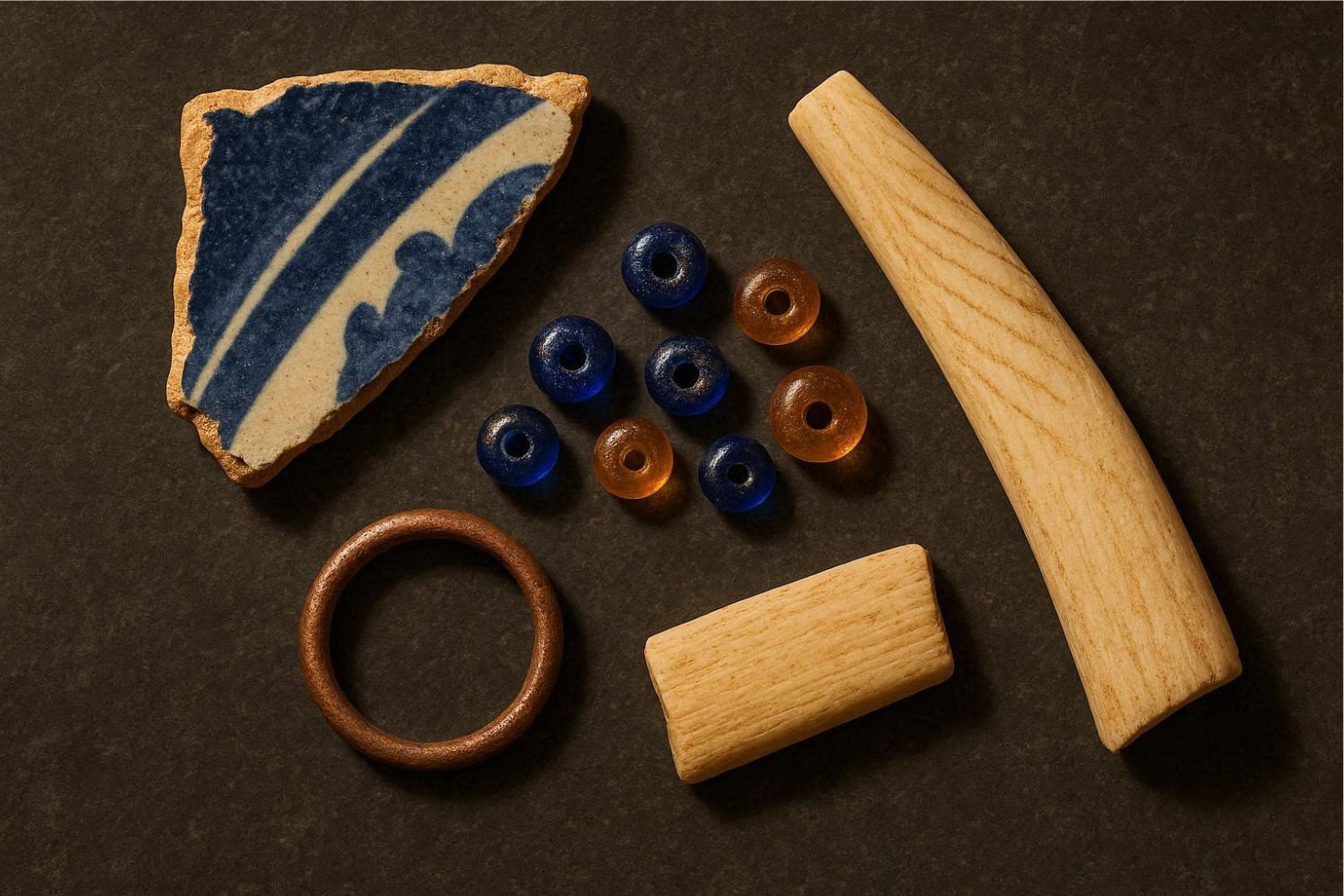
The sheer volume of material recovered from Mankhamba sets it apart. The excavation yielded the largest collection of iron and copper objects ever recovered at an Iron Age site in Malawi at the time of excavation. Here is what came out of the ground:
Ceramics: 45,850 pot fragments. 31 fragments of Chinese porcelain. 89 pieces of glazed ceramics. Smoking pipes. Spindle whorls for weaving.
Metal: 225 iron objects — blades, points, bangles, and corroded tools — alongside tuyere pipes and iron slag that confirm iron smelting happened at or near the site. 377 copper objects including rings, bangles, wire, rods, and even one fragment of a copper bowl — the first metal vessel ever found at an archaeological site in Malawi.
Beads: 5,335 glass beads. Five rock crystal beads. Eight shell beads.
Bone and ivory: 38,663 animal bone specimens. 33 polished ivory bangles. 37 unpolished ivory bangles. 46 cowrie shells.
Also found: one silver object and one lead object — neither metal occurs naturally in Malawi, and their presence alone signals long-distance trade.
The Chinese Porcelain: Blue on White, from Jingdezhen and Zhangzhou
The 31 fragments of Chinese porcelain found at Mankhamba were identified by Bennet Bronson, Curator Emeritus of Asian Anthropology and Ethnology at the Field Museum in Chicago. His analysis found that the pieces came from two kiln centres in China.
Some were made in Jingdezhen in Jiangxi province — one of China’s most celebrated pottery centres, famous for its blue-and-white ware. Others came from Zhangzhou in Fujian province. Both production centres were active in the period between roughly AD 1540 and 1600 — a window of just 60 years. This places the porcelain firmly in the Ming Dynasty, and gives archaeologists a precise date range for the layer in which it was found.
Blue-on-white Chinese porcelain did not arrive at Mankhamba by accident. It came via Swahili traders on the East African coast — the same network that carried ivory westward from Malawi to ships anchored off the coast of Mozambique. The porcelain fragments are physical proof that Mankhamba was plugged into the Indian Ocean trade system by the late 16th century.
The Glass Beads: India’s Khami Series
Glass beads made up by far the largest category of imported goods at Mankhamba. Of the 5,335 found, the great majority — 98 per cent — belonged to what scholars call the Khami series.
Khami series beads were identified and catalogued by Dr Marilee Wood of the University of the Witwatersrand in Johannesburg, one of the leading experts on glass beads from southern African archaeological sites. She determined that these beads, mostly blue, originated in India — specifically from the port cities of Cambay on India’s west coast and Nagapattinam on its south-east coast.
The first traders to bring Khami beads to the East African coast were Moorish sea-traders during the first half of the 15th century. Portuguese traders later joined the network. According to historical records, when the Portuguese king learned that African traders preferred Indian beads over European ones, he directed his governor at Nagapattinam to load ships specifically with the type of beads that Africans wanted.
The beads arrived at Mankhamba in enormous quantities. Some had melted together in lumps — evidence of fires that swept parts of the settlement. The 5,335 beads recovered are the largest single glass bead collection found at any Iron Age site in Malawi. At Mankhamba, they were not rare luxuries. They were currency and everyday adornment.
Copper and Iron: The Flames of Malawi
The name “Malawi” is widely thought to derive from the Chewa word for flames — a reference to the sight of iron-smelting kilns lighting the night sky across the kingdom. The excavation confirms this was not legend.
Iron slag and tuyere pipes — the clay nozzles used to blast air into smelting furnaces — were found across all four soil levels at Mankhamba. Iron objects included blades, arrow points, bangles, and hoes. Iron was used for farming tools to cultivate the valley’s fertile soils, and for weapons that helped maintain and expand Maravi authority.
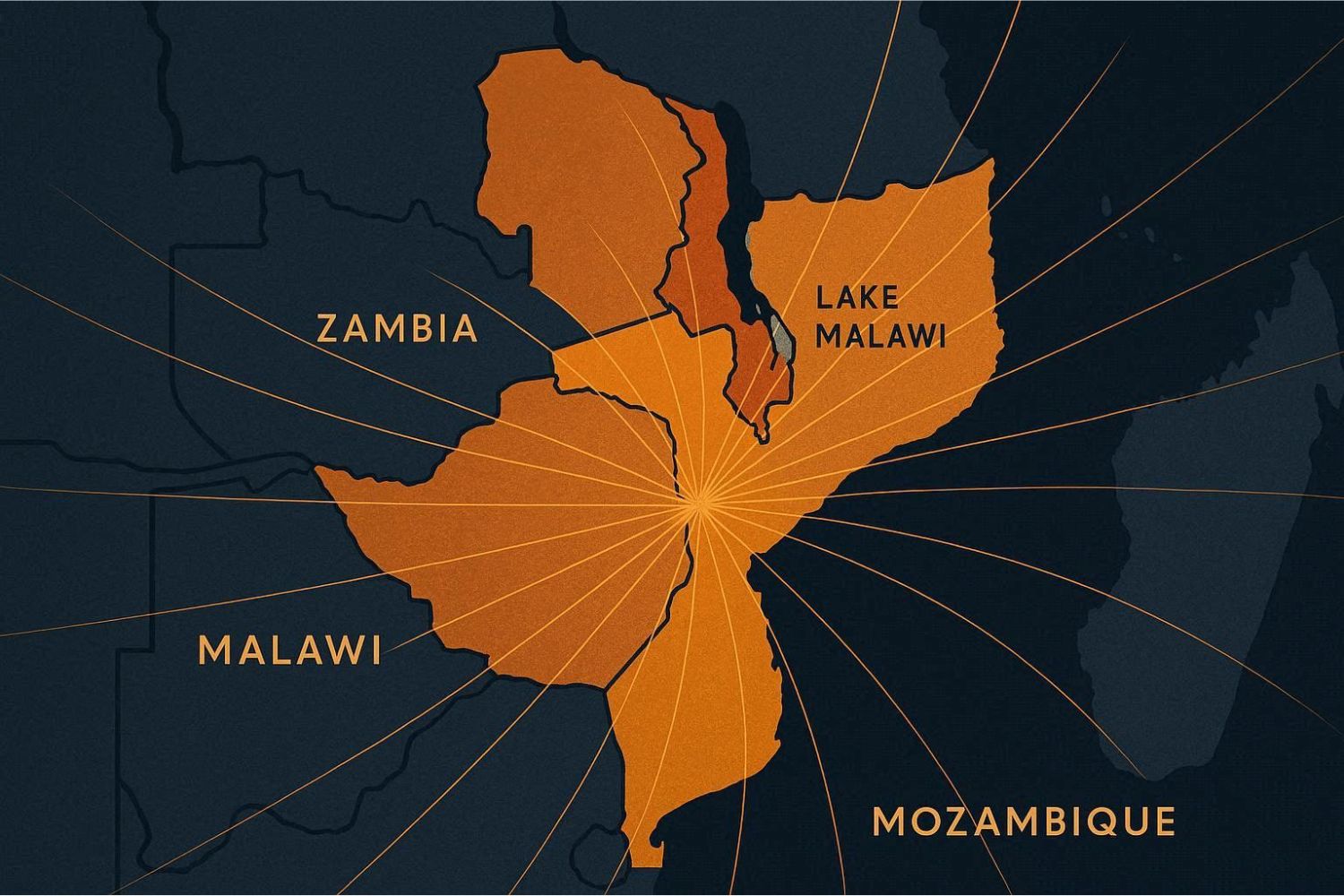
The 377 copper objects are equally significant. No copper deposits exist near Mankhamba. Every piece of copper found at the site was imported — then worked and shaped locally. Copper slag confirms this reworking happened on site. The copper came from the Copperbelt region straddling Zambia and what is now the Katanga province of the Democratic Republic of Congo. This means the Maravi were operating established overland trade routes hundreds of kilometres to the west, at the same time as they were connected to the Indian Ocean coast to the east.
What This Evidence Tells Us
Taken together, the finds at Mankhamba describe a society that was not peripheral. It was connected, self-aware, and prosperous.
By the 17th century, Mankhamba was processing ivory in large quantities for export. It was importing prestige goods from India and China. It was smelting iron and reworking copper from hundreds of kilometres away. Its Kalonga sat at the centre of a trade web that reached from the Zambian Copperbelt to the Mozambican coast, and from there across the Indian Ocean.
Portuguese explorer Gaspar Bocarro passed through Maravi territory in 1616. He described the settlements of lesser tributary chiefs as large villages, and the Kalonga’s own settlement as a town. He never reached Mankhamba itself, but based on the archaeological record, it was almost certainly larger than anywhere he visited.
What Juwayeyi’s work established, for the first time with physical evidence, is that this was not a kingdom of oral memory alone. It was a real place, with real goods, real trade, and real global connections. The soil at the confluence of the Nadzipulu and Nakaingwa rivers holds the proof.
Why This Matters for the Revival
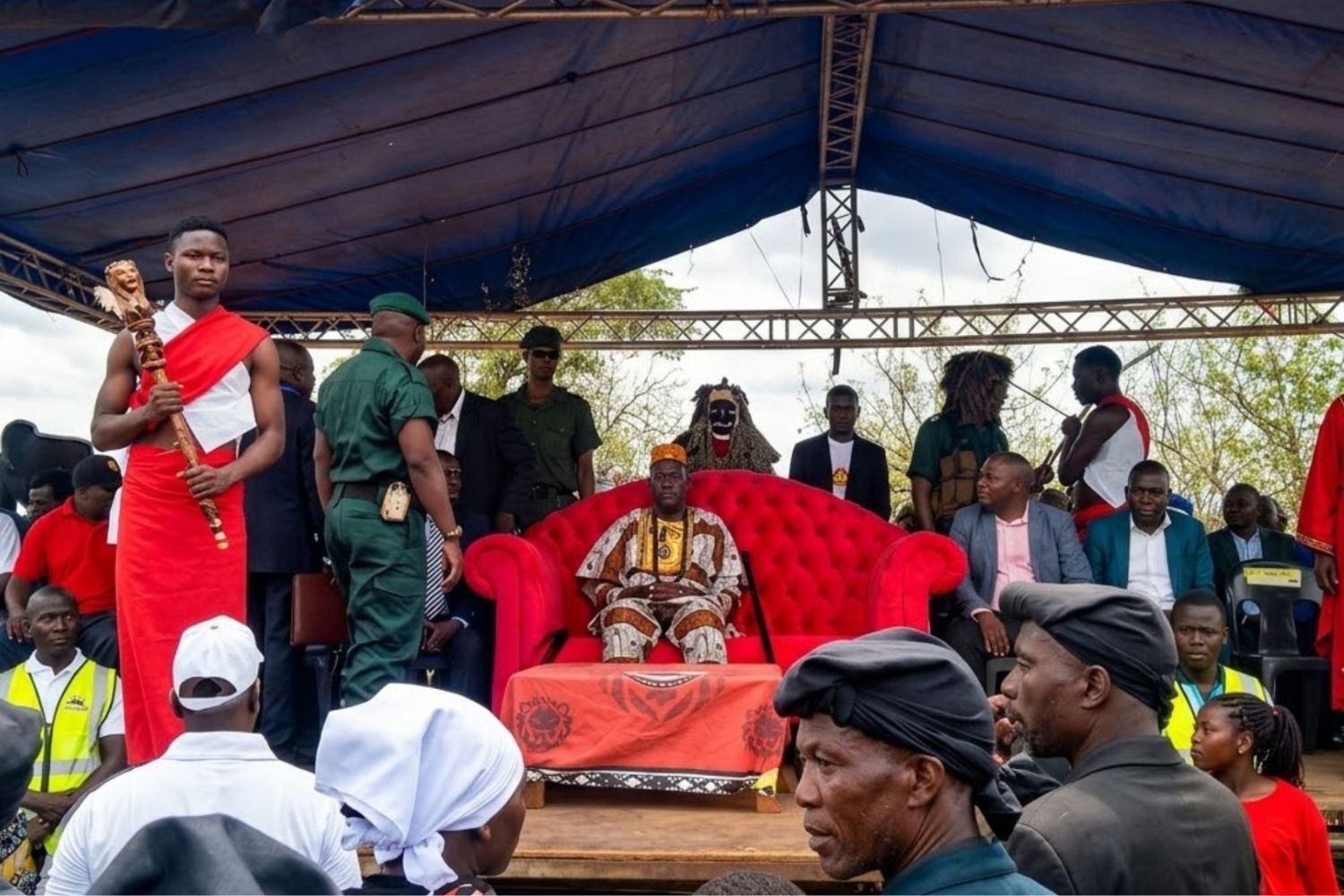
The Mankhamba Cultural Revival takes its name from this site for a reason. The archaeological record is not background context — it is the foundation of the organisation’s claim that restoring the Kalonga lineage is a restoration of something real, documented, and significant.
One of the Revival’s stated goals is to see Mankhamba formally designated as a heritage site — open to researchers, students, and visitors. The Juwayeyi collection, which brought international experts from Chicago, Johannesburg, and Tucson to study objects found in a field in Dedza District, shows what this site can offer the world when it is properly recognised and protected.
The beads, the porcelain, the copper bowl, and the iron slag are not relics of a simple past. They are evidence of a sophisticated one.